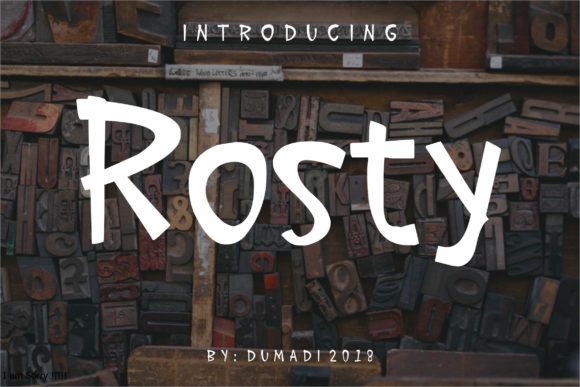
Rosty Font: A Unique Typeface for Handmade Crafts
As a small business owner and crafter, finding the perfect typeface is often about balancing artistic expression with commercial viability. We need fonts that stop the scroll on social media but also remain legible when printed on a 2x2 inch sticker or cut from vinyl on a Cricut machine. Rosty is a striking typeface with irregular shaped letters that offers exactly this balance. It provides a distinct, handmade aesthetic without sacrificing the structural integrity needed for professional product design. For those of us creating physical goods, labels, and digital downloads, Rosty serves as a versatile tool to elevate brand identity and add a bespoke touch to every project.
The Visual Personality of Irregular Typography
Rosty falls into the Script Amp category of fonts, but it defies the traditional expectations of a flowing, connected script. Instead, it embraces an organic, slightly disjointed rhythm that mimics the imperfections of hand-lettering. This irregularity is its greatest strength for makers. In a marketplace saturated with perfectly uniform digital typography, customers are drawn to designs that feel human and tactile. The unique character shapes in Rosty create visual texture that suggests craftsmanship and authenticity.
This typeface carries a modern vintage charm. It feels nostalgic yet fresh, making it ideal for brands that want to convey warmth and approachability. Unlike standard serif or sans serif fonts that can sometimes feel sterile on handmade items, Rosty injects immediate personality. Whether you are designing packaging for artisanal soaps or creating boho-style wedding stationery, the font’s inherent quirkiness signals to the customer that care and attention went into the creation process. It transforms generic text into a design element itself.
Practical Applications for Product Makers
The true test of any creative font is how it performs across different mediums. Rosty shines in applications where short, impactful wording is required. Because of its distinctive letterforms, it works best as a display font for headlines, names, and short phrases rather than long paragraphs of body text.
- Product Labels and Packaging: Use Rosty for the primary product name on candle jars, spice tins, or skincare bottles. The irregular strokes hold up well on curved surfaces and textured paper stocks like kraft or linen.
- Vinyl Decals and Signs: For Cricut and Silhouette users, Rosty offers excellent weedability. The letters are bold enough to prevent tearing during transfer but detailed enough to look intricate. It is perfect for farmhouse signs, car decals, and personalized tumblers.
- Stationery and Invitations: Wedding welcome boards, birthday invitations, and thank-you cards benefit from Rosty’s expressive nature. It pairs beautifully with watercolor backgrounds or minimalist line art.
- Digital Printables: Create high-value wall art or planner covers by using Rosty for motivational quotes or monthly headers. The font’s unique style adds perceived value to digital downloads, distinguishing them from free alternatives.
- Apparel and Tote Bags: Screen printing and heat transfer vinyl projects require fonts that read well from a distance. Rosty’s weight and character definition ensure readability on fabric while maintaining a boutique, custom-printed look.
Readability and Production Considerations
While we love unique aesthetics, functionality cannot be ignored. When working with irregular shaped letters, readability is paramount. Rosty manages to be artistic without becoming illegible, but there are practical considerations for production. Always test your designs at actual size before committing to a full print run or cutting batch. What looks striking on a 24-inch monitor may become muddy when scaled down to a 1-inch tag.
For cutting machine users, pay attention to the spacing. Because the letters are irregular, automatic kerning software sometimes misjudges the gaps between characters. Manual adjustment is often necessary to ensure consistent visual rhythm and to prevent overlapping points that could cause cutting errors. When designing for small stickers or jewelry tags, consider increasing the tracking slightly to improve legibility. If you are using Rosty for web design or social media graphics, ensure there is sufficient contrast against the background color, as the varying stroke widths can sometimes disappear against busy textures.
Strategic Font Pairing for Brand Consistency
To maximize the impact of Rosty, it must be paired correctly. As a display font with strong personality, it needs a supportive partner that grounds the design. Avoid pairing Rosty with other highly decorative or handwritten fonts, as this creates visual competition and reduces readability.
A clean, geometric sans serif font is often the best companion. The structured neutrality of a sans serif allows Rosty’s irregularities to pop while ensuring that essential information like ingredients, dates, or pricing remains instantly readable. Alternatively, a simple serif font can add a touch of traditional elegance, particularly for wedding stationery or heritage-style branding. When building a brand identity, establish a hierarchy: use Rosty for emotional hooks and titles, and reserve your secondary font for functional communication. This consistency helps customers recognize your products instantly across different platforms and physical touchpoints.
Leveraging OpenType Features and Alternates
Before finalizing your designs, explore the full capabilities of the Rosty file. Premium fonts often include alternates, ligatures, and swashes that can significantly enhance your work. Check if specific letter combinations have been designed to flow better together, correcting any awkward spacing caused by the irregular shapes. Swashes can be invaluable for filling negative space in logo design or adding flourishes to invitation corners. Additionally, verify multilingual support if you sell internationally or cater to diverse communities. Utilizing these built-in features ensures your typography looks professionally typeset rather than hastily assembled.
Commercial Licensing and Business Safety
For Etsy sellers, printable creators, and small shop owners, understanding licensing is as important as design skills. Before using Rosty in products intended for sale, carefully review the commercial license terms. Most premium fonts allow for the creation of end products (like mugs, shirts, or printed cards) but restrict the resale of the font file itself or the creation of competing font products.
If you plan to use Rosty in editable templates (such as Canva or Corjl templates), confirm that this specific use case is permitted, as template licensing often differs from standard commercial use. Protecting your business means respecting intellectual property rights. Proper licensing not only keeps you legally safe but also supports the type designers who create these essential assets. When listing products made with Rosty, you do not typically need to credit the font in the product description, but having a valid license gives you peace of mind to focus on growing your handmade business with confidence.